How Melite bamboo salt is made
The authentic multi-stage process behind every grain
How Melite bamboo salt is made
Click on any step around the circle to explore the process in detail.
 01
01
 02
02
 03
03
 04
04
 05
05
 06
06
 07
07
 08
08
 09
09
 10
10
Sourcing Pure Sea Salt
We start by collecting natural, mineral-rich sea salt, prepared for roasting using traditional, ancient Korean techniques to ensure a high initial mineral profile.
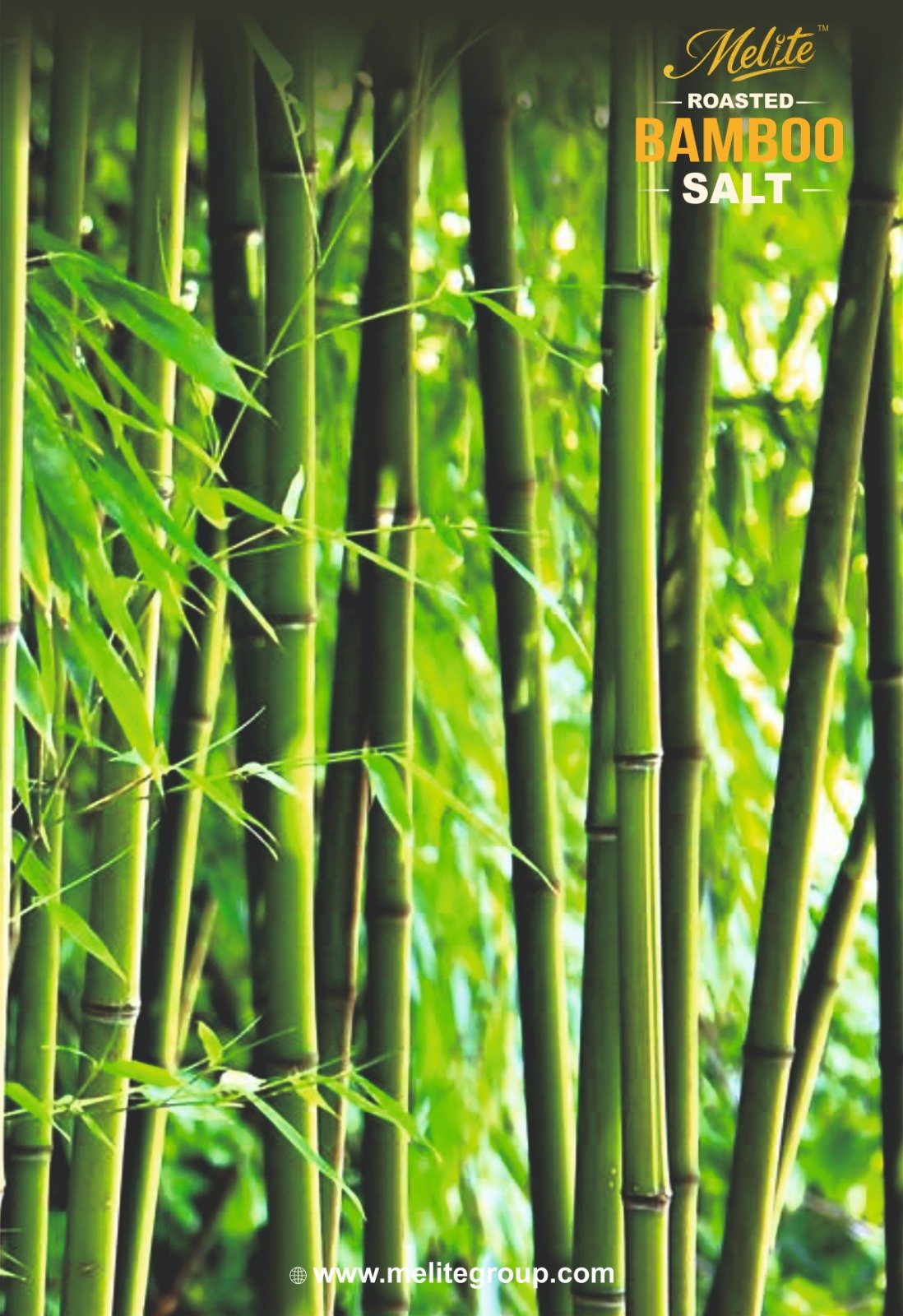
Harvesting Giant Bamboo
Specifically chosen giant bamboo trunks (typically 3 years old) are harvested and cut into sections, retaining their natural moisture and active bamboo sap.
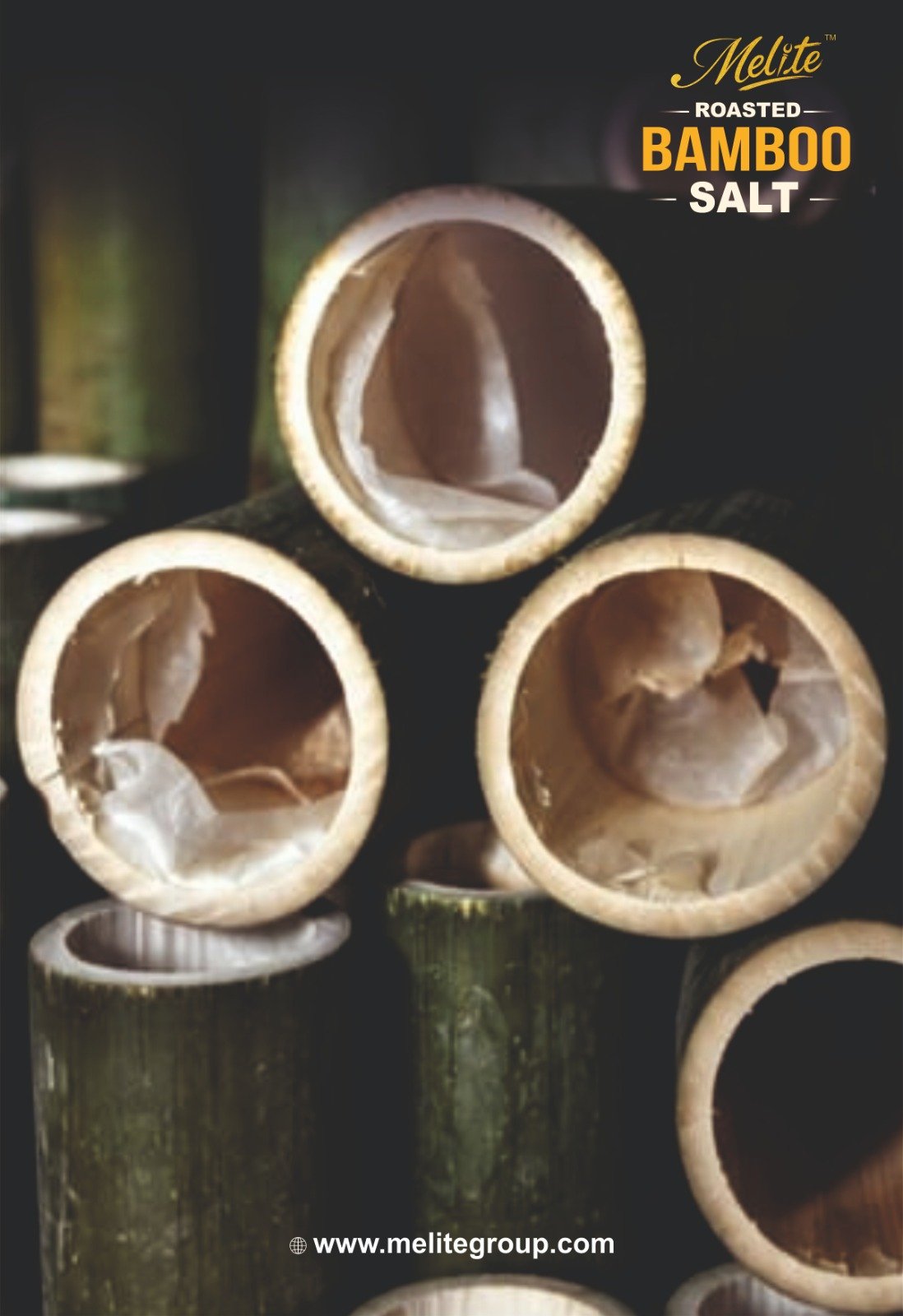
Cutting Bamboo Trunks
The harvested giant bamboo trunks are cut into specific sized sections (retaining the bottom node to form a natural cylinder cup) to hold the salt.
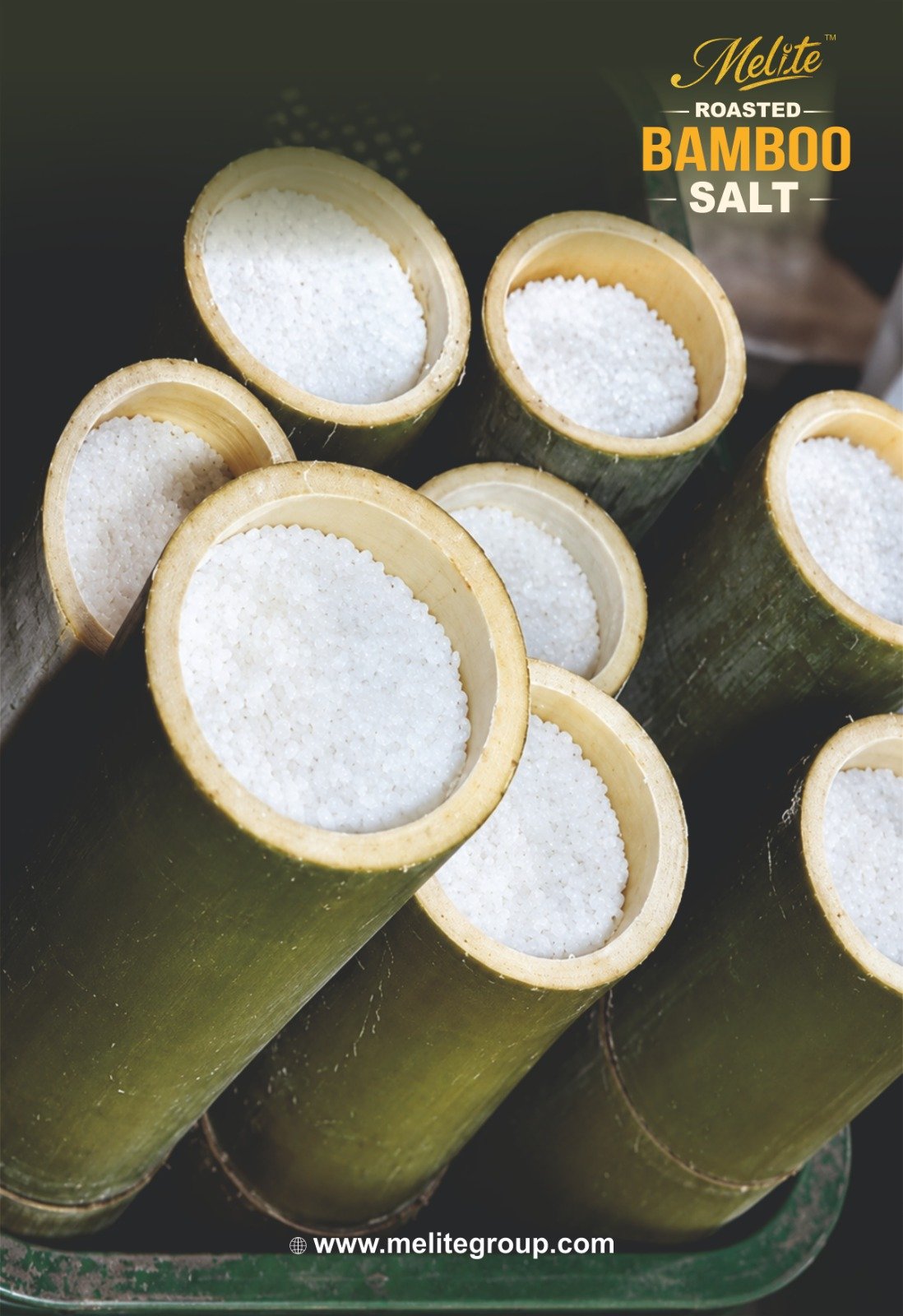
Stuffing Salt into Bamboo
The natural sea salt is tightly packed manually into the hollow cavities of the cut bamboo cylinders, compressing it to eliminate air pockets.
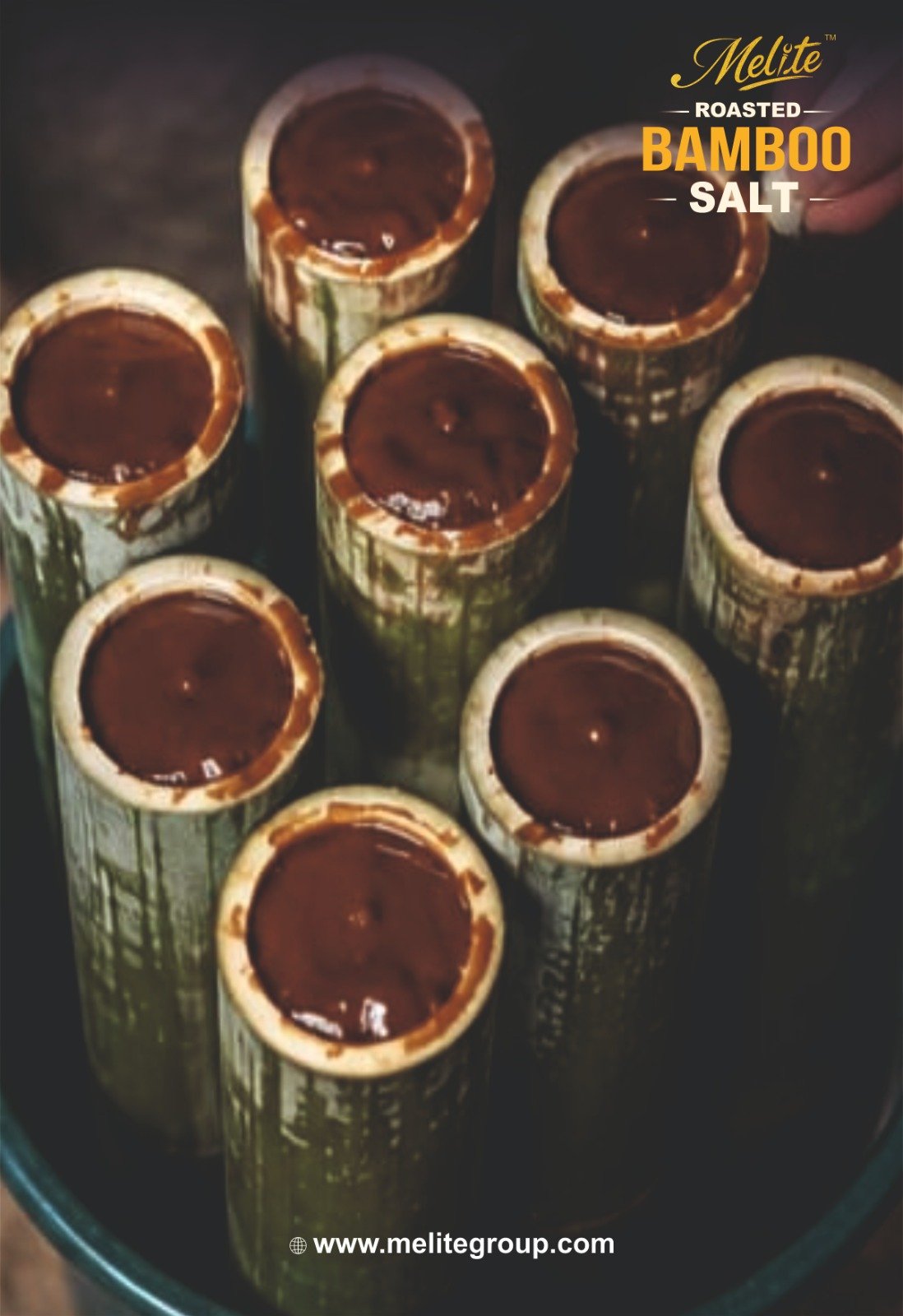
Sealing with Mineral-Rich Clay
The open ends of the stuffed bamboo cylinders are sealed using pure, deep forest yellow clay that is rich in natural trace minerals and iron.
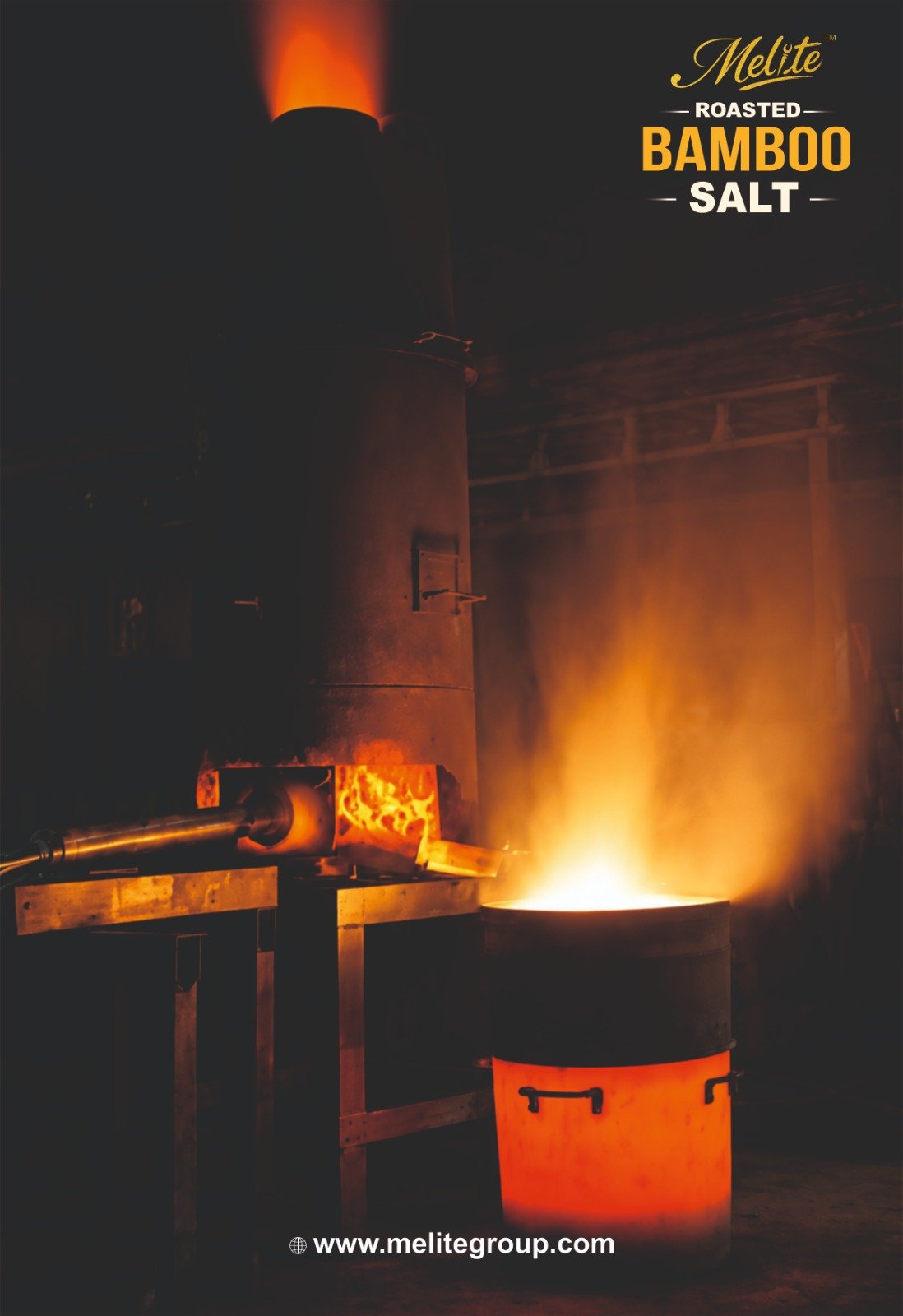
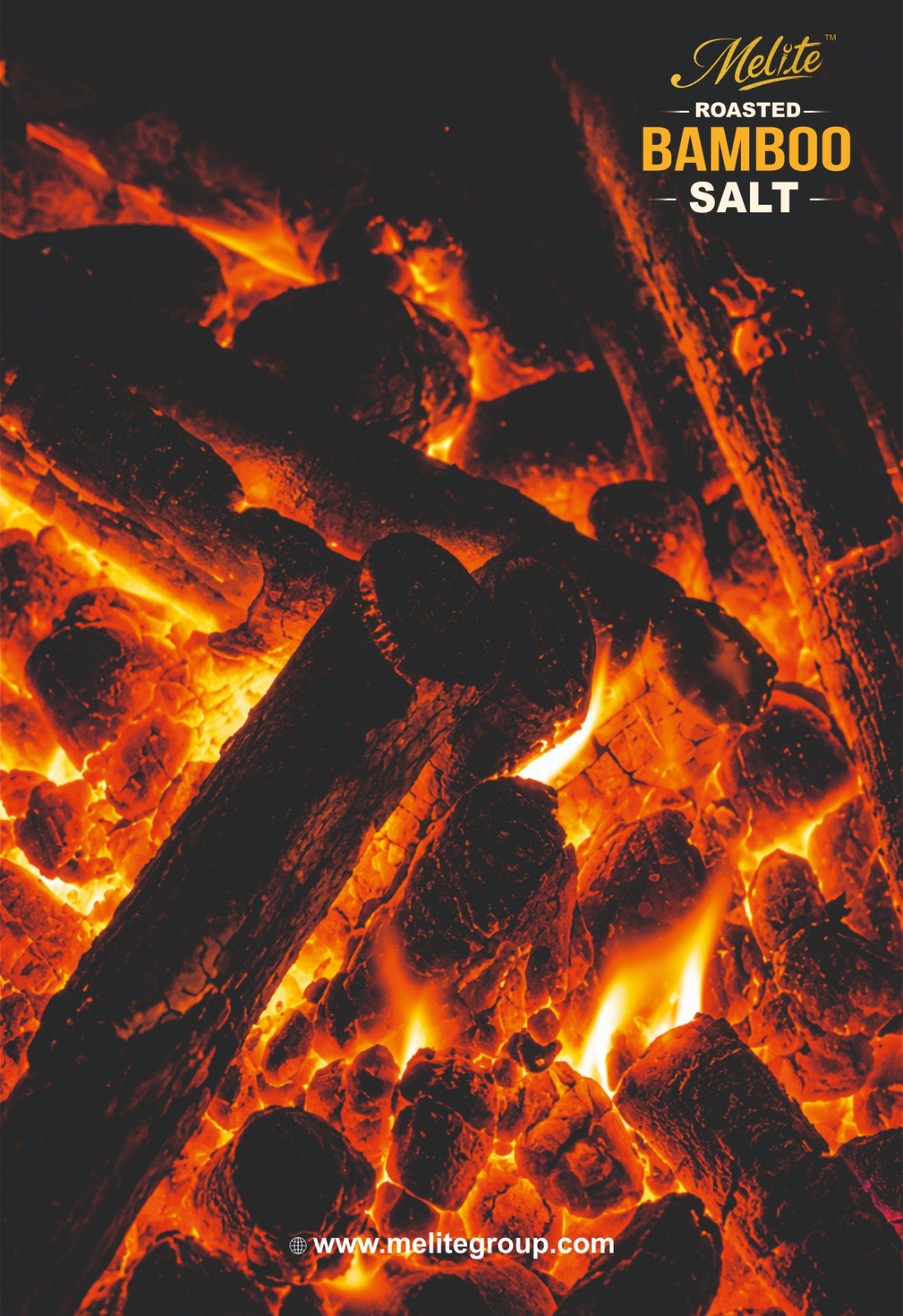
Roasting in Metal Furnaces Fired by Pine Wood
The sealed bamboo cylinders are loaded into traditional metal furnaces and roasted at intense temperatures using pine wood as fuel, infusing the salt with pine resin aroma and bamboo active elements.
Crushing and Grinding
The roasted bamboo salt columns are crushed and ground into smaller granules, preparing them for subsequent roasting cycles.
Multi-cycle Roasting (Up to 9x)
For our Signature 9X, the complete process of stuffing, clay-sealing, and roasting is repeated 9 times (with each subsequent cycle optimized to take approximately 2.4 days as preparation steps run in parallel). With each subsequent cycle, the salt absorbs more active nutrients and trace minerals from the bamboo and forest clay.
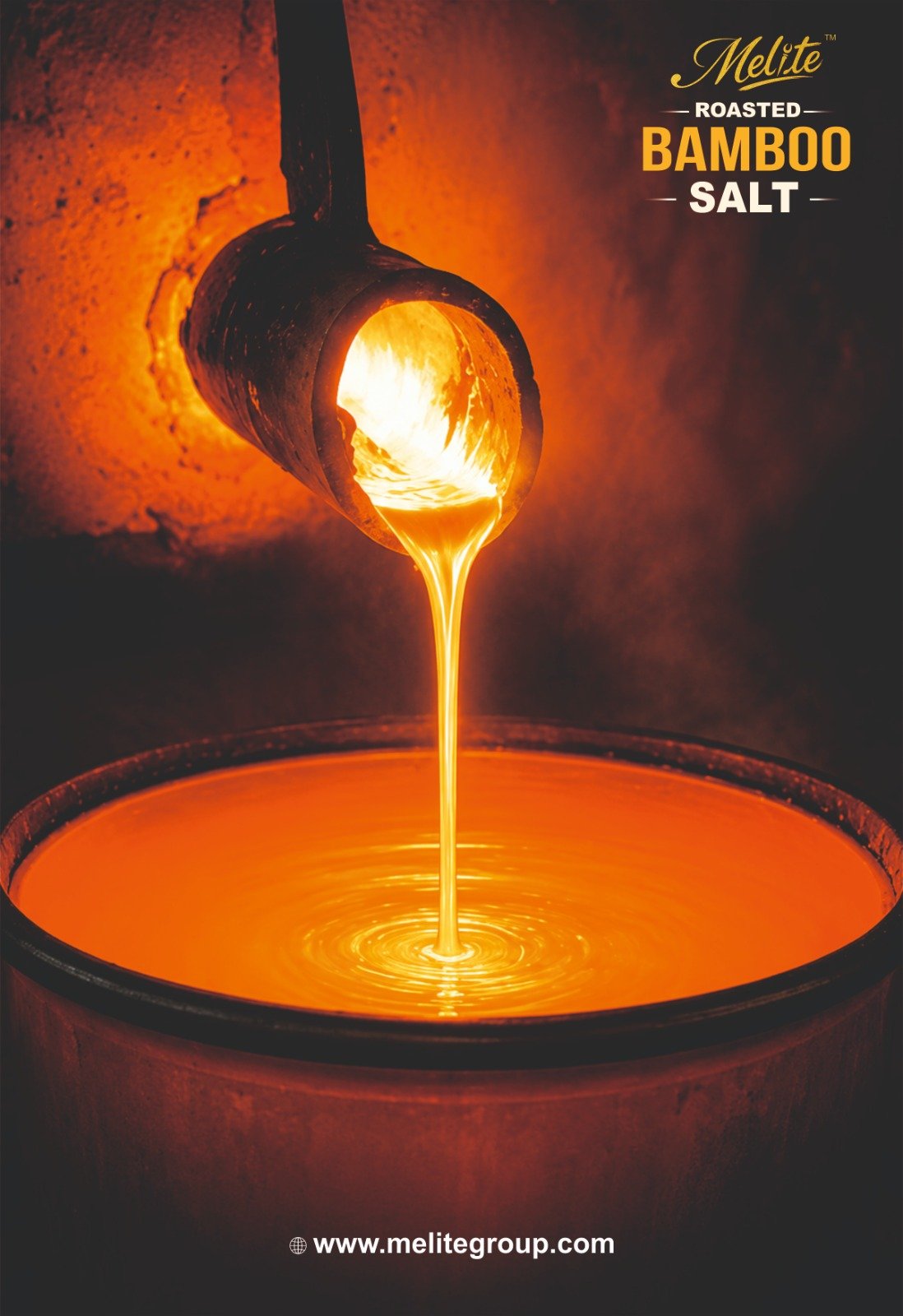
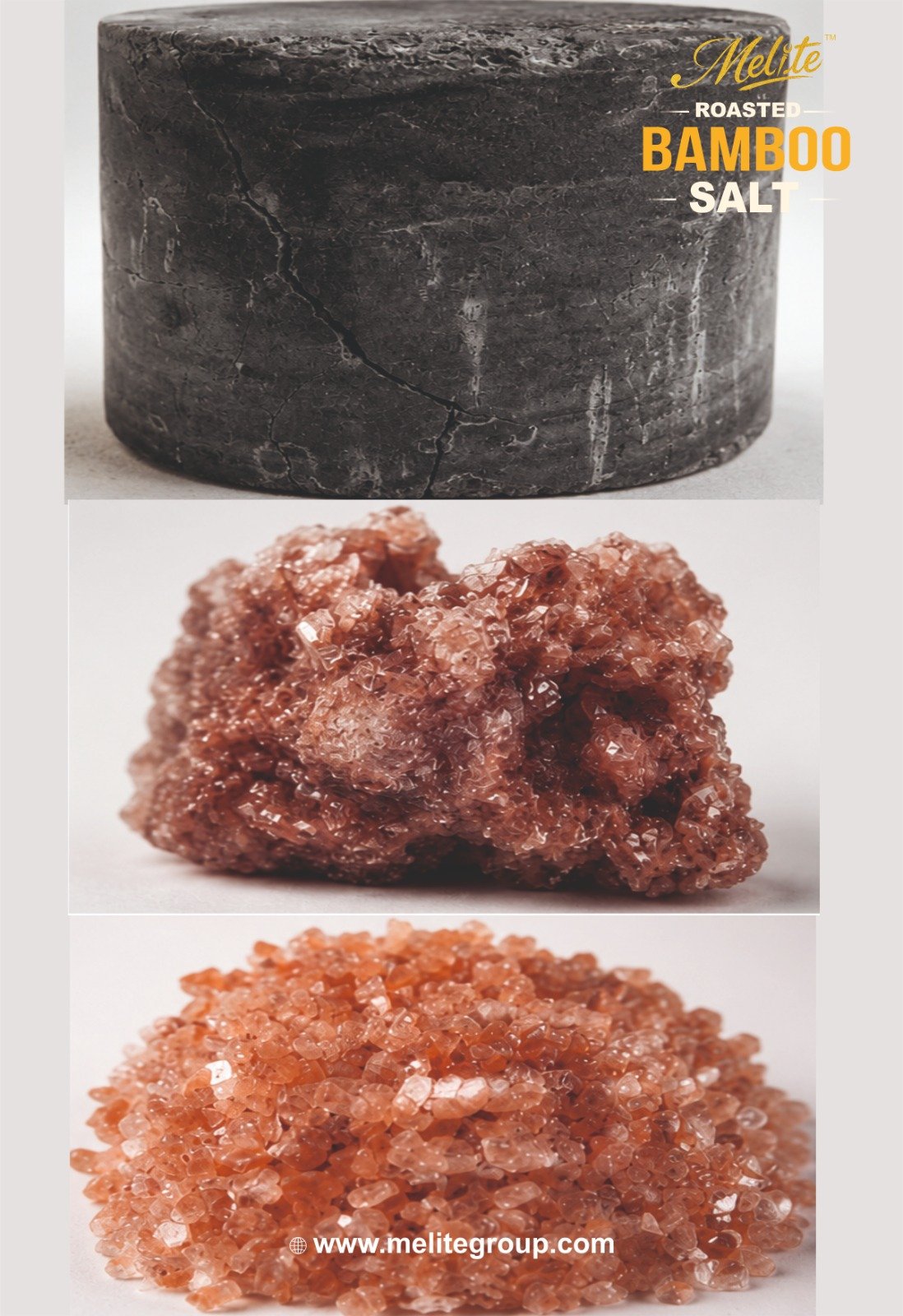
Cooling and Solidifying
After the final high-temperature melting cycle, the molten salt is cooled down slowly, solidifying it into hard, stone-like structures.
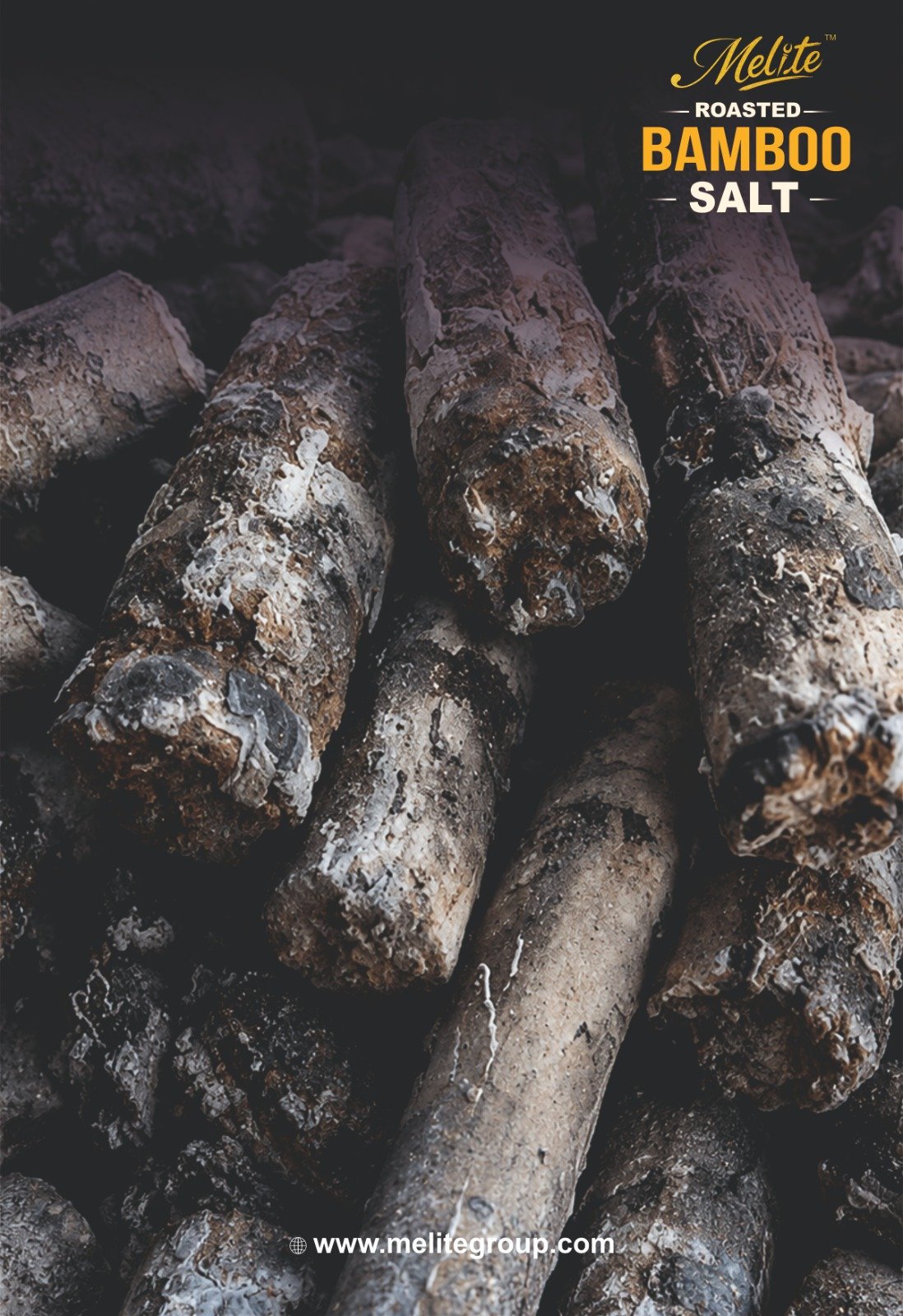
Final Crystal Grinding
The solidified salt is crushed into beautiful purple crystals or fine powder (the final crystal form), ready for packaging and consumption.
Sourcing Pure Sea Salt
We start by collecting natural, mineral-rich sea salt, prepared for roasting using traditional, ancient Korean techniques to ensure a high initial mineral profile.
Harvesting Giant Bamboo
Specifically chosen giant bamboo trunks (typically 3 years old) are harvested and cut into sections, retaining their natural moisture and active bamboo sap.
Cutting Bamboo Trunks
The harvested giant bamboo trunks are cut into specific sized sections (retaining the bottom node to form a natural cylinder cup) to hold the salt.
Stuffing Salt into Bamboo
The natural sea salt is tightly packed manually into the hollow cavities of the cut bamboo cylinders, compressing it to eliminate air pockets.
Sealing with Mineral-Rich Clay
The open ends of the stuffed bamboo cylinders are sealed using pure, deep forest yellow clay that is rich in natural trace minerals and iron.
Roasting in Metal Furnaces Fired by Pine Wood
The sealed bamboo cylinders are loaded into traditional metal furnaces and roasted at intense temperatures using pine wood as fuel, infusing the salt with pine resin aroma and bamboo active elements.
Crushing and Grinding
The roasted bamboo salt columns are crushed and ground into smaller granules, preparing them for subsequent roasting cycles.
Multi-cycle Roasting (Up to 9x)
For our Signature 9X, the complete process of stuffing, clay-sealing, and roasting is repeated 9 times. With each subsequent cycle, the salt absorbs more active nutrients and trace minerals from the bamboo and forest clay.
Cooling and Solidifying
After the final high-temperature melting cycle, the molten salt is cooled down slowly, solidifying it into hard, stone-like structures.
Final Crystal Grinding
The solidified salt is crushed into beautiful purple crystals or fine powder (the final crystal form), ready for packaging and consumption.
Naturally Occurring Minerals
Trace minerals preserved through traditional roasting
Naturally occurring mineral profile varies by roasting process. Specific values available in laboratory reports. Click here to view our NABL Lab Test Report.
How Melite is Different
-
ProcessRefined
-
MineralsLimited
-
ProductionSingle process
-
CategoryEveryday table salt
-
UseStandard seasoning
-
ProcessTraditionally Roasted
-
MineralsNaturally occurring
-
ProductionMulti-stage roasting
-
CategoryPremium artisanal
-
UseGourmet wellness